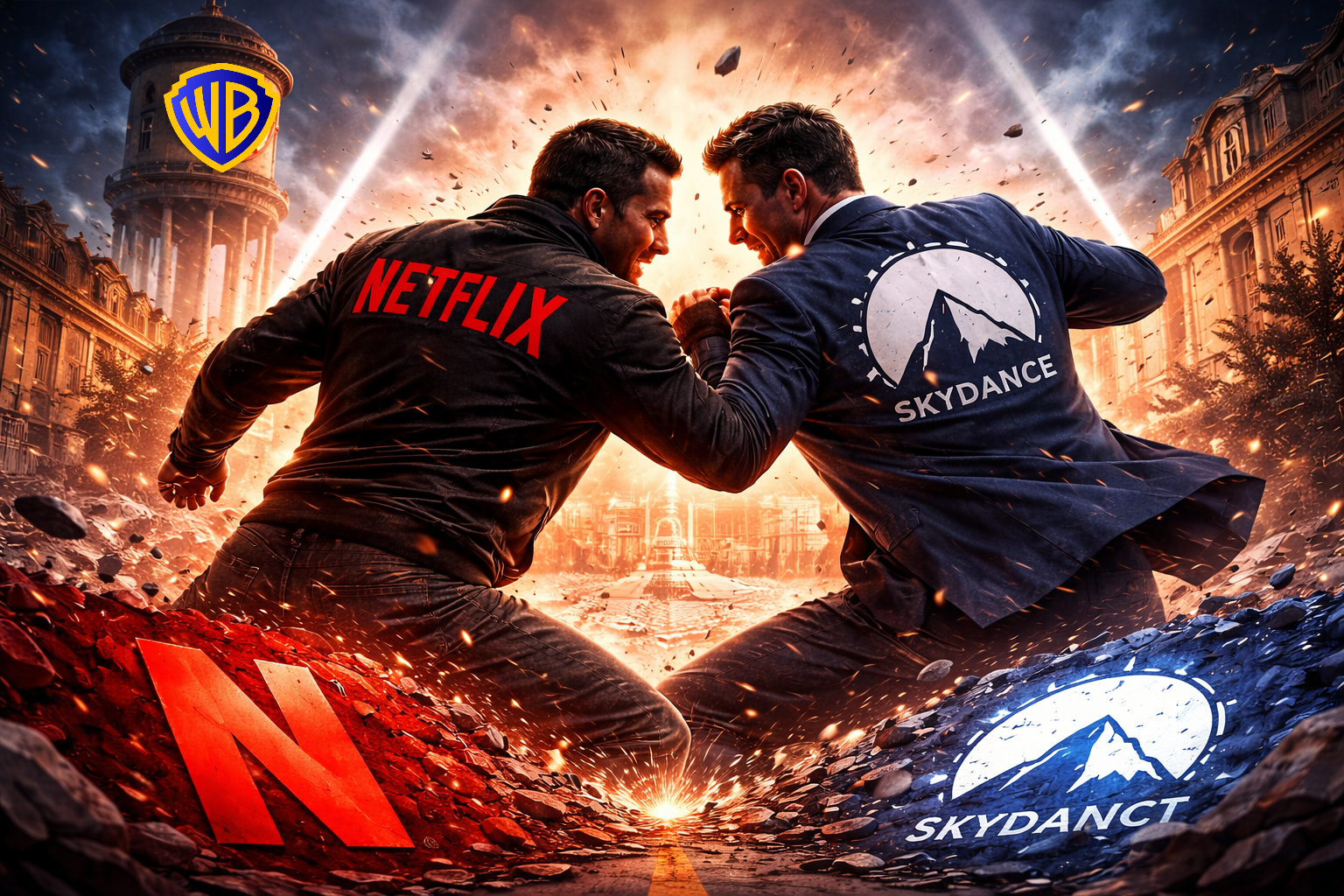
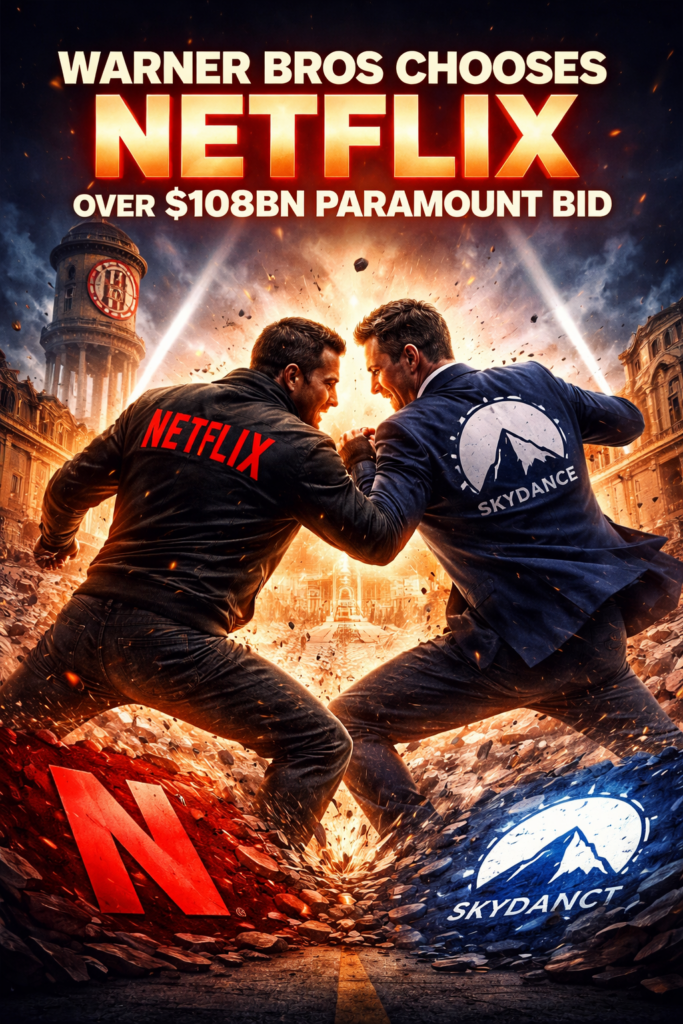
In a decision that underscores the shifting balance of power in Hollywood, Warner Bros. Discovery has advised its shareholders to reject a massive $108.4bn (£80.75bn) takeover offer from Paramount Skydance, instead backing a previously announced $72bn agreement with streaming giant Netflix.
The board’s recommendation brings a dramatic turn to a takeover saga that has captivated the global entertainment industry. Paramount had insisted its bid was financially superior, but Warner Bros. Discovery said its directors unanimously concluded that the Netflix deal delivers stronger long-term value and carries fewer risks.
Board Cites Risk and Uncertainty in Paramount Offer
In a detailed legal filing, Warner Bros. Discovery outlined what it described as “numerous and significant risks” associated with Paramount’s proposal. The board also rejected claims that the Ellison family—one of America’s wealthiest dynasties and key backers of Paramount Skydance—was providing firm financial support for the deal.
By contrast, the company said Netflix’s offer is fully financed, strategically clear, and presents a lower level of regulatory uncertainty. That clarity, the board argued, makes the streaming-led deal more attractive despite its lower headline valuation.
Netflix Strengthens Its Hollywood Grip
Netflix was quick to welcome the endorsement. Ted Sarandos, the company’s co-chief executive, said the merger agreement was “superior” and firmly in the best interests of Warner Bros. Discovery shareholders. In a letter to investors, Netflix emphasized that its proposal benefits from a straightforward funding structure and a smoother regulatory path.
The deal, agreed on 5 December, would see Netflix acquire Warner Bros.’ film studio and HBO streaming service, along with access to one of the most valuable content libraries in entertainment history. Iconic franchises and decades of film and television content would significantly strengthen Netflix’s global dominance.
However, Netflix is not seeking Warner Bros.’ traditional pay-TV networks. As a result, channels such as CNN and TNT would be spun off into a separate company before the takeover is finalized—a move that further reflects the industry’s pivot away from cable television toward streaming-first strategies.
Paramount’s All-or-Nothing Approach
Paramount’s vision differs sharply. Its bid targets Warner Bros. Discovery in its entirety, including film, streaming, and television networks. Such a move would combine major competitors under one roof, bringing Warner Bros.’ assets together with Paramount’s own portfolio, which includes CBS, MTV, and Showtime.
That breadth could raise serious regulatory concerns. With media ownership already heavily concentrated, regulators may question whether such consolidation would reduce consumer choice and competition across the television and streaming landscape.
The Saga Isn’t Over Yet
Despite the board’s clear stance, the battle may not be finished. Paramount still has the option to return with a revised offer, meaning Hollywood’s latest power struggle could yet see another twist.
What is already clear, however, is the message this moment sends: streaming platforms now sit at the center of the entertainment universe. Warner Bros. Discovery’s decision to favor Netflix over a higher-priced traditional media bid highlights how strategic certainty, global reach, and digital dominance increasingly outweigh sheer size in the modern media economy.
About the Author