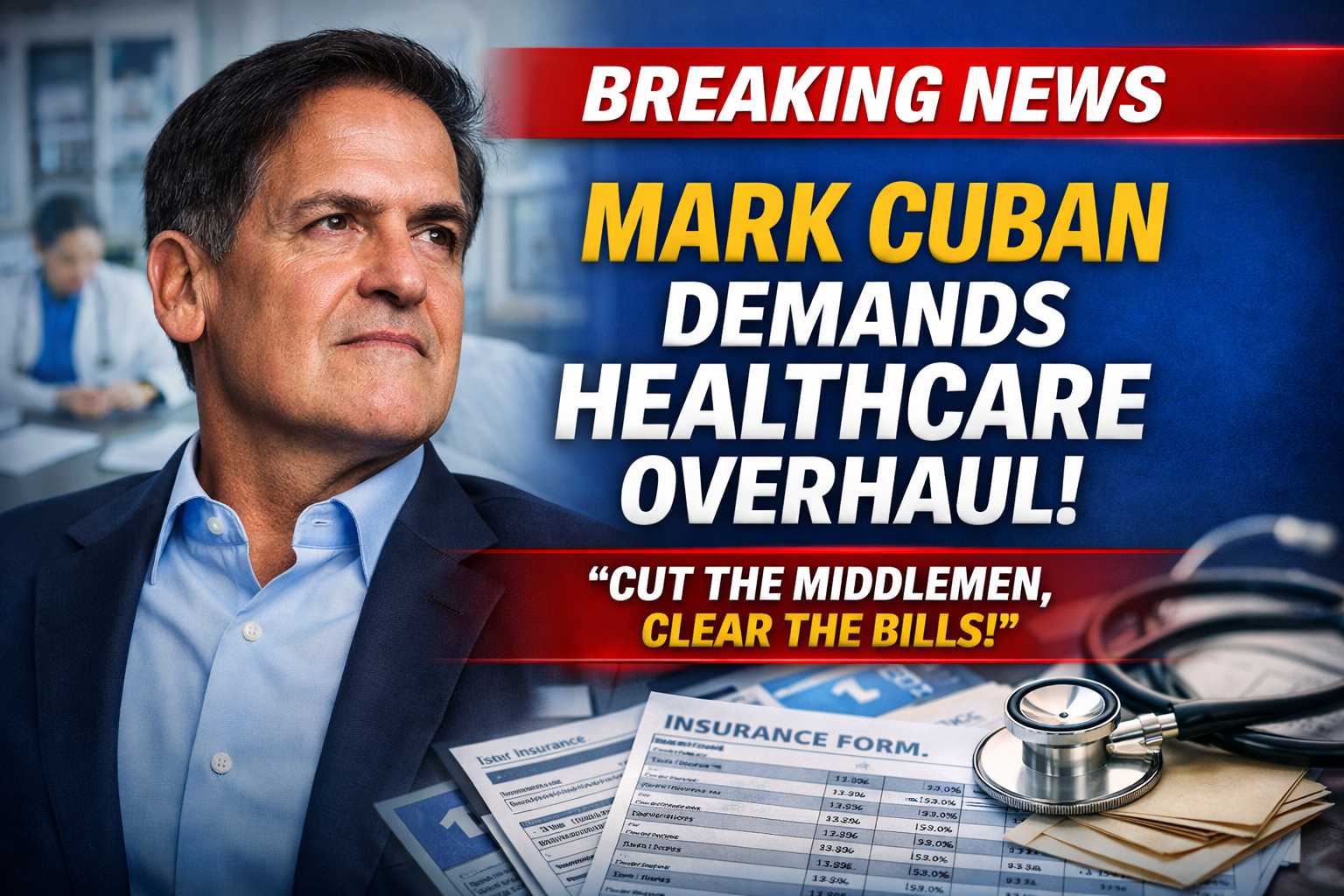
Billionaire entrepreneur Mark Cuban is once again challenging one of America’s most entrenched and confusing systems — healthcare — and his solution is strikingly simple. In a candid return to his personal blog, Blog Maverick, Cuban laid out a stream-of-consciousness argument that questions decades of accumulated complexity and asks a provocative question: what if U.S. healthcare worked the way it did in 1955?
After a long hiatus from publishing, Cuban reappeared online in January with a post he described as informal, exploratory, and deliberately unfinished. His goal wasn’t to unveil a polished reform plan, but to shake loose assumptions that have gone largely unchallenged. He said he wanted to make people — especially those inside the healthcare industry — stop and think harder about why the system works the way it does.
At the heart of Cuban’s argument is the belief that healthcare was never meant to be this complicated. According to him, it’s a fundamentally simple industry that has been buried under layers of administrative systems, billing codes, and intermediaries that do little to improve patient care. The driving force behind that complexity, he argues, isn’t better outcomes, but the pursuit of margin dollars.
To illustrate his point, Cuban offered a deliberately retro vision of what healthcare should look like. In his hypothetical version of 1955, patients visit doctors, doctors provide care, and patients receive a bill. If they can afford it, they pay it. If they can’t, that’s where society steps in — and that, in Cuban’s view, is the only real question worth debating. Everything else, he suggests, is noise layered onto what used to be a straightforward transaction.
Cuban was blunt in criticizing how modern healthcare obscures real costs. He pointed to bundled pricing, inflated charges for basic supplies, and contracts so dense they effectively hide what patients are actually paying for. Simply publishing prices, he argued, doesn’t solve the problem when the entire system is built around upcoding, bundling, and strategic confusion.
Insurance companies came in for particular scrutiny. Cuban noted that managing and administering payments alone can add 20% to 30% in overhead, even before factoring in fraud and overbilling. In a system he estimates costs roughly $5 trillion annually, those percentages translate into enormous sums of money that never touch patient care.
This line of thinking is consistent with how Cuban approaches business more broadly. Rather than adding flashy innovations, he tends to look for ways to remove layers that exist mostly because they always have. From his perspective, real disruption often comes from subtraction, not invention.
That philosophy is already visible in his real-world ventures. His Cost Plus Drugs company was built on transparent pricing and eliminating middlemen in pharmaceuticals — a direct response to the same inefficiencies he now highlights in healthcare at large. It’s also why Cuban has long gravitated toward early-stage companies that challenge entrenched industries by simplifying how they operate.
Importantly, Cuban made clear he wasn’t presenting a final or fully formed solution. He admitted he wrote the post in about 90 minutes and openly invited criticism, debate, and alternative ideas. But for investors, policymakers, and patients alike, his message lands as more than nostalgia. It’s a reminder that sometimes the most radical disruption isn’t about reinventing the system — it’s about making it behave the way people always assumed it did.
About the Author