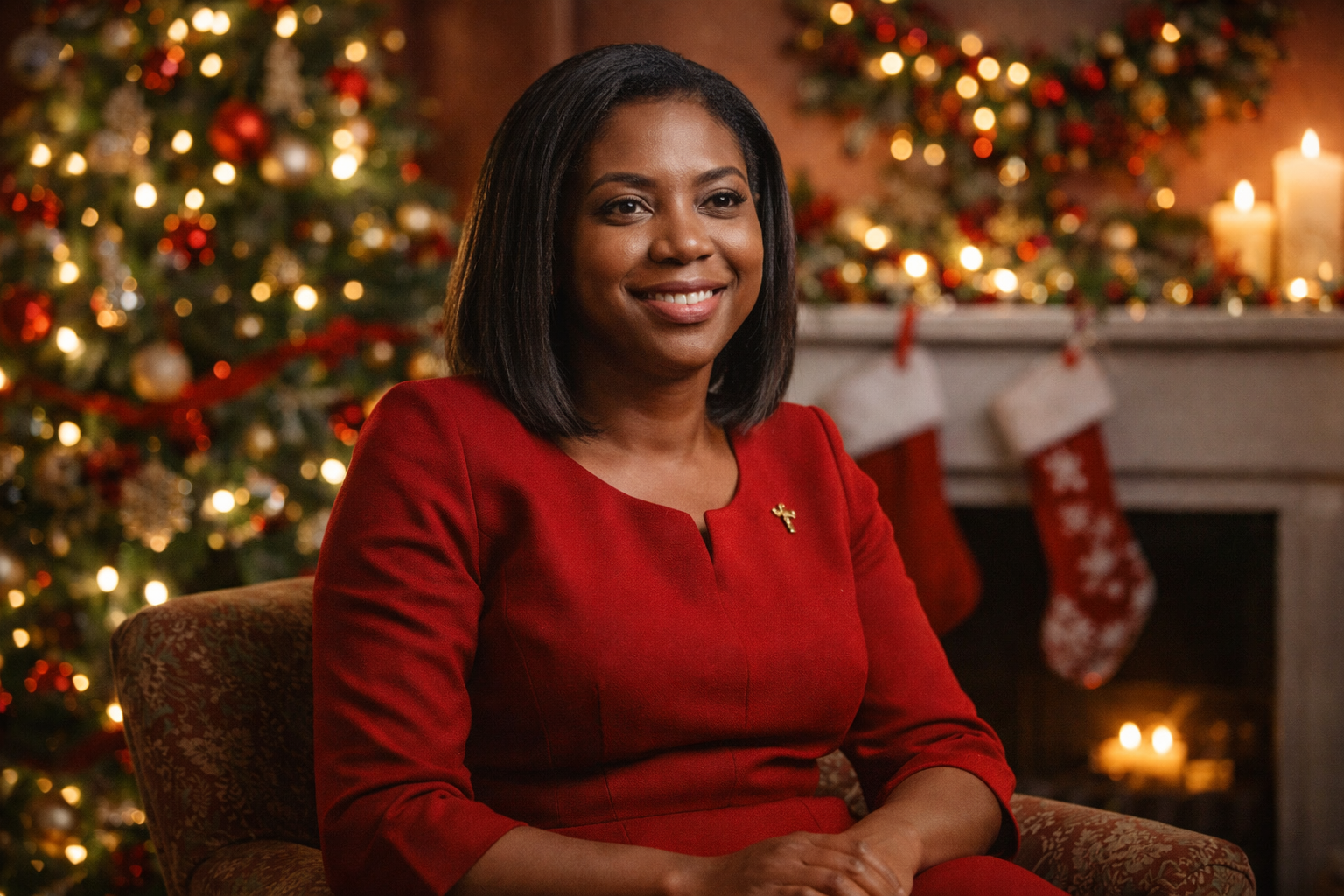
Conservative Party leader Kemi Badenoch has placed faith, family, and tradition at the centre of her Christmas message, saying she is raising her children to understand that the festive season is not only about presents and celebration, but about the birth of Christ.
Speaking as part of the annual round of Christmas messages from UK political leaders, Badenoch offered a deeply personal reflection on motherhood, memory, and belief. The Tory leader, who has three children, spoke openly about how Christmas has become a time for grounding her family in shared values as well as creating traditions she hopes will endure for generations.
“Christmas is the most special time of year,” she said, describing it as a season for joy and reconnecting with friends, but above all a time for family. She reflected on how quickly children grow up and how precious the opportunity is to spend uninterrupted time together during the holidays.
For Badenoch, Christmas also carries a strong emotional dimension. The season prompts memories of loved ones who are no longer alive, including her father, and reminds her of her own childhood Christmases. Those experiences, she said, have shaped her determination to build lasting traditions for her own children — traditions she hopes they will one day pass on.
While acknowledging the excitement her children feel for gifts and Father Christmas, Badenoch said she makes a conscious effort to teach them that Christmas has a deeper meaning. “They love presents and Father Christmas,” she explained, “but I teach them that Christmas is also about the birth of Christ.”
Faith and values were central themes of her message. Badenoch grew up in a Methodist household, while her husband and children are Catholic, creating what she described as a shared commitment to instilling Christian values at home. Among those values, she highlighted the idea that giving matters more than receiving, and that sacrifice and service are core lessons of the season.
Her relationship with faith, however, has not been straightforward. Badenoch has previously spoken about being raised as an Anglican before losing her faith following the horrific Josef Fritzl case in Austria, in which a father imprisoned and abused his daughter for more than two decades. Today, she describes herself as a cultural Christian — agnostic in belief, but deeply connected to Christian traditions and the moral framework they provide.
Alongside her personal reflections, Badenoch used her Christmas message to underline a policy commitment linked to Britain’s religious heritage. She announced plans to double grant aid for listed places of worship if the Conservatives return to power, arguing that historic churches play a vital role in local communities.
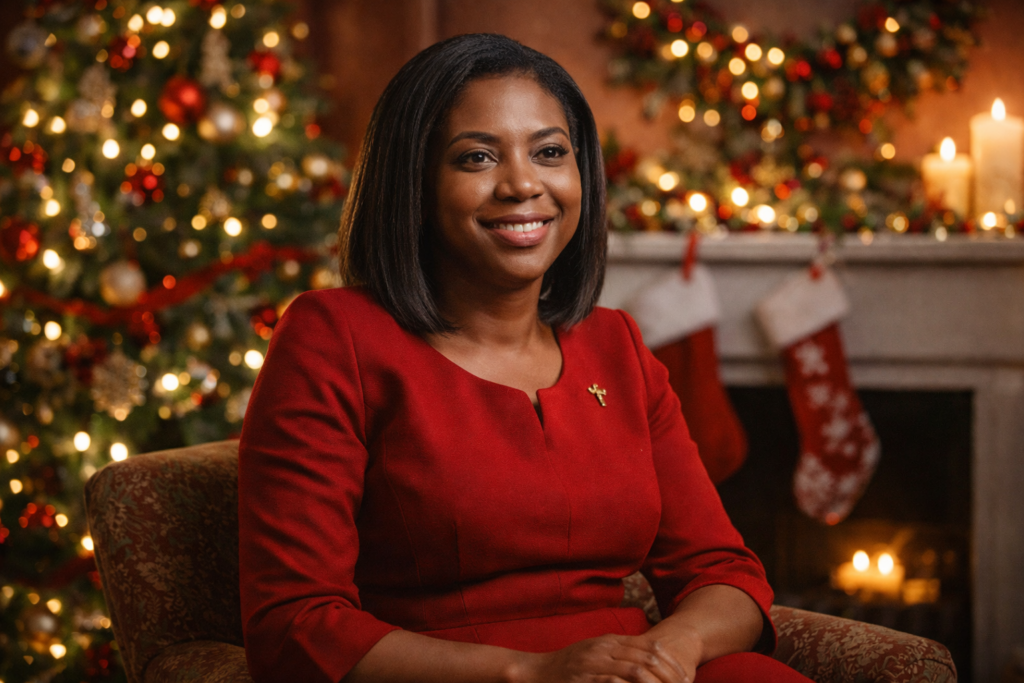
She criticised Labour for failing to appreciate that role, pointing to recent government cuts to the Listed Places of Worship Grant Scheme. Funding for the scheme has been reduced from £42 million to £23 million, with a new cap limiting individual churches to £25,000 for repairs. Badenoch said a future Conservative government would restore funding to previous levels and remove the cap entirely.
According to figures from Historic England, nearly 1,000 places of worship — 969 in total — are at risk of being lost to neglect, decay, or unsuitable development. Badenoch warned that without action, Britain could lose some of its most treasured buildings.
“Churches are a repository of our local history,” she said, noting that many contain memorials to war dead and serve as a permanent link between generations. She argued that their value extends beyond faith, acting as an anchor for communities — including those from immigrant backgrounds like her own.
Badenoch also highlighted her personal involvement in preserving local churches, saying she has helped raise funds for repair work at St Andrew’s Church in Boreham and the parish church of St Michael and All Angels in Roxwell, both located in her Saffron Walden constituency in Essex.
As political leaders across the spectrum share festive messages, Badenoch’s stood out for its blend of personal faith, cultural tradition, and policy ambition — framing Christmas not just as a celebration, but as a reminder of continuity, community, and values she believes are worth preserving.
About the Author