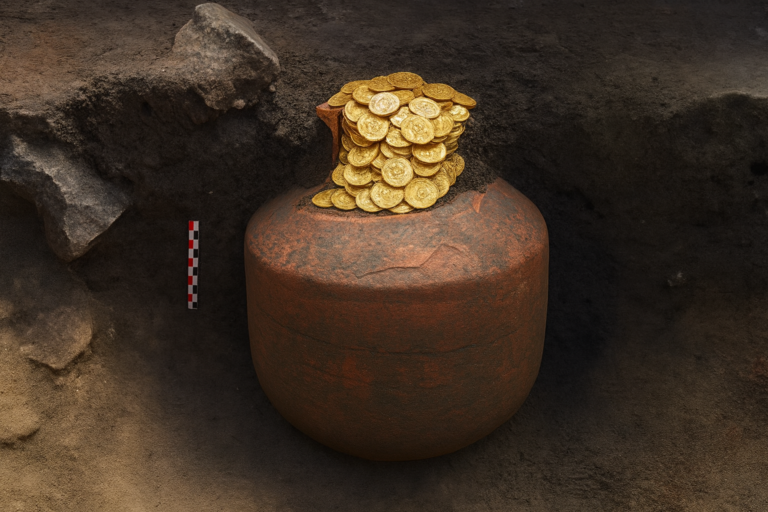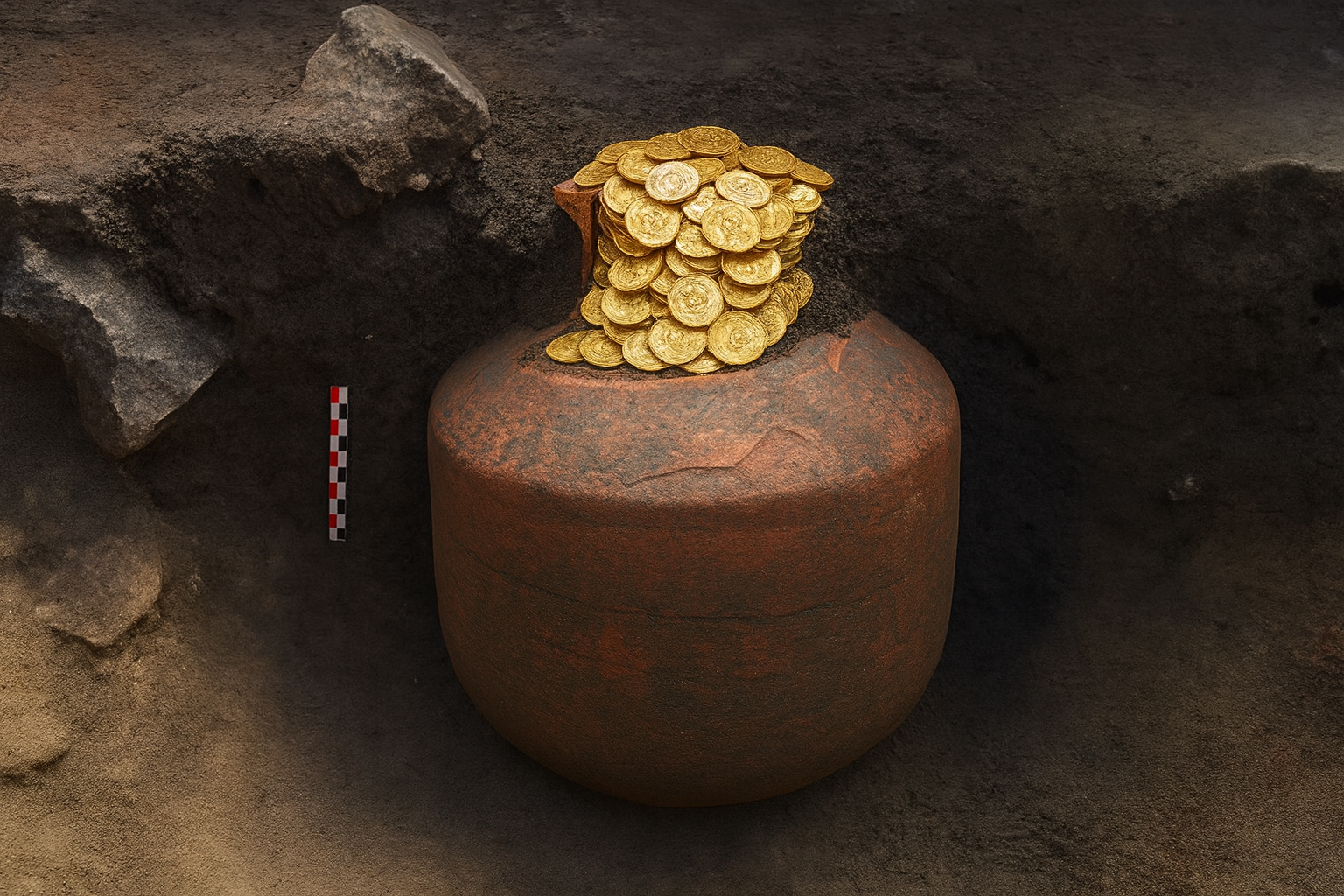
In a discovery that is already being hailed as one of the most significant archaeological finds in recent European history, a team of researchers in France has uncovered an astonishing cache of 40,000 Roman coins, estimated to be 1,700 years old. This ancient treasure, buried deep beneath the soil for nearly two millennia, offers a rare and powerful glimpse into life—and turmoil—during the final centuries of the Roman Empire.
A Discovery Hidden for 17 Centuries
The extraordinary hoard was found during a routine excavation in a rural region of France, where archaeologists were conducting site surveys ahead of a construction project. What began as a standard dig quickly transformed into a moment of historic significance as layers of soil revealed tightly packed clusters of bronze and silver Roman coins—each one a tiny fragment of a long-forgotten past.
Experts estimate the trove dates back to the third or fourth century CE, a period marked by economic instability, political upheaval, and frequent military conflict within the Roman Empire. The sheer number of coins suggests they may have been hidden deliberately—possibly by a wealthy landowner, a merchant safeguarding profits, or even a local administrator storing collected taxes.
Clues to a Turbulent Era
Preliminary examinations reveal a variety of coin types, including pieces bearing the likenesses of several Roman emperors. These small portraits are not only artifacts but time stamps, each helping historians assemble a more nuanced timeline of the region’s connection to Rome.
The discovery also raises intriguing possibilities about the motivations behind the hoard’s burial. Was it concealed during a wave of invasions? Was it part of an emergency stash never recovered by its owner? Or perhaps a contribution to a larger economic system that collapsed before it could be retrieved?
Researchers now face the delicate task of cataloging, cleaning, and analyzing each coin—a process expected to take months, if not years. However, early insights already suggest this find could reshape our understanding of Roman influence in ancient Gaul.
A Rare Archaeological Triumph
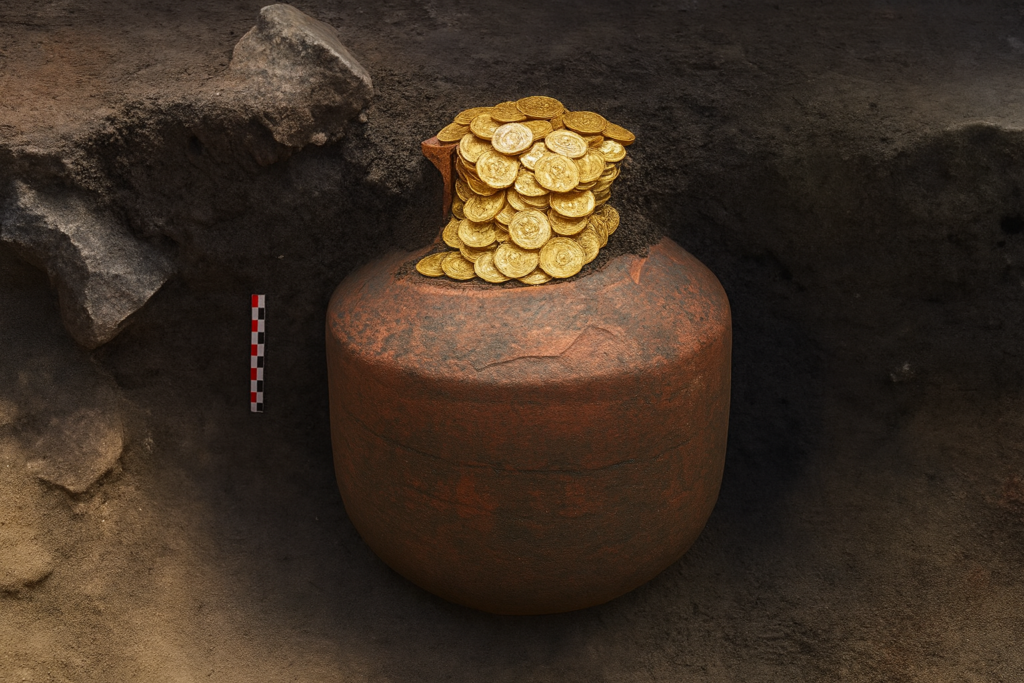
While individual Roman coins are not uncommon finds across Europe, a massive, intact collection of this scale is exceedingly rare. The sheer quantity, combined with the coins’ remarkable preservation, makes the discovery a treasure trove not only of precious metal but of historical data.
Archaeologists emphasize that such finds help fill critical gaps in the historical record—illuminating trade routes, political structures, and everyday life across the empire’s far-reaching territories.
What Comes Next?
The artifact trove will be transferred to a regional conservation lab where specialists will stabilize the coins and document every detail. Plans are already underway for a future exhibition, which is expected to draw international attention.
For now, the site where the coins lay hidden for nearly 1,700 years remains under careful protection, while historians, archaeologists, and enthusiasts around the world celebrate a find that reminds us how much of the ancient world still sleeps beneath our feet—waiting to tell its story.
About the Author