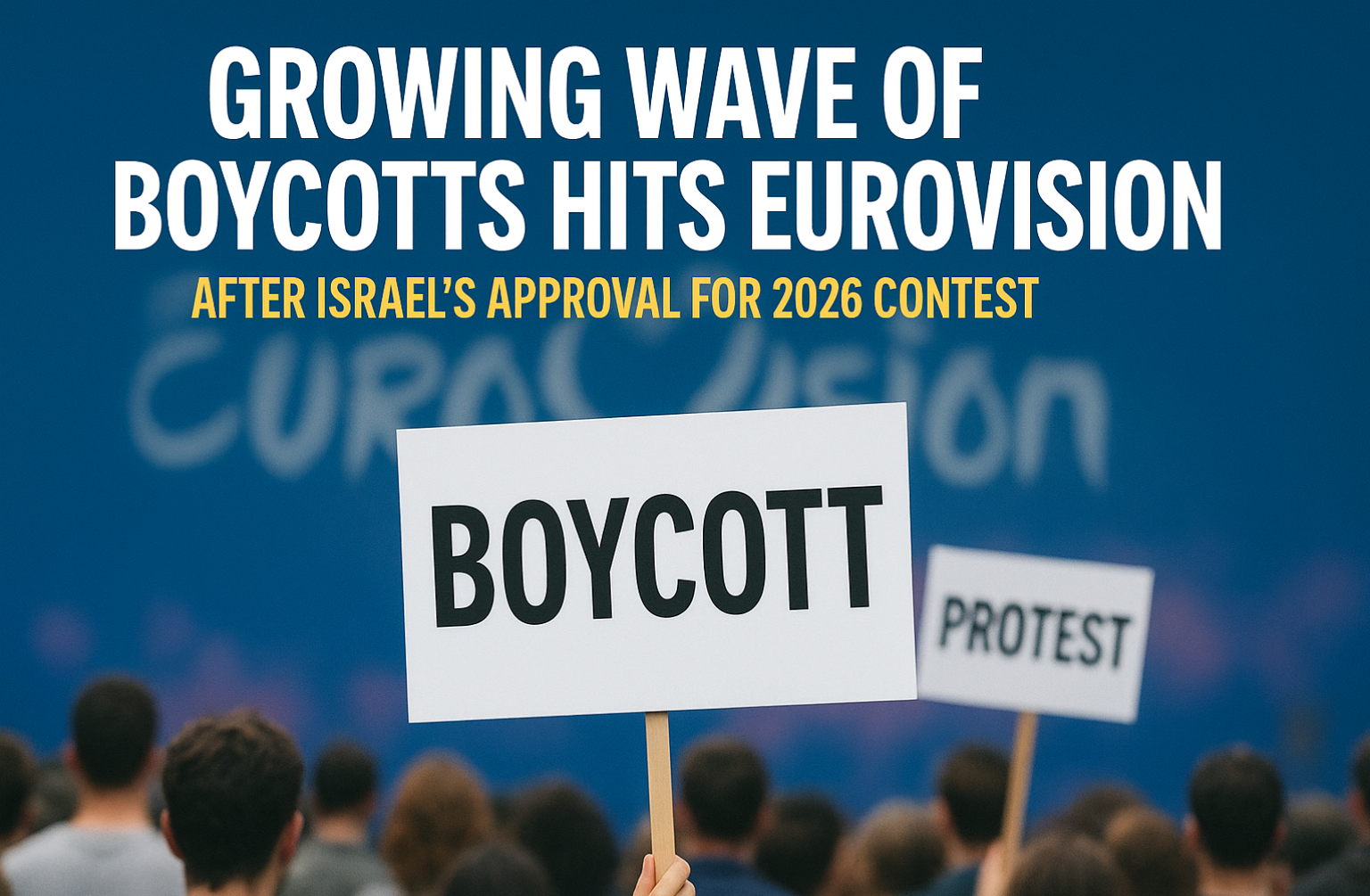
Tension surrounding the upcoming Eurovision Song Contest 2026 has escalated sharply, as a widening group of participating nations signal that they may refuse to take part. The backlash began shortly after organizers confirmed that Israel would be permitted to compete despite months of public debate, petitions, and political pressure.
A Rapidly Expanding Protest Movement
Several public broadcasters across Europe have issued statements expressing “deep concern” about the decision, with some announcing their intent to withdraw entirely. Early signals came from countries such as Ireland and Portugal, where cultural institutions and artists have spent weeks urging their governments and broadcasters to reconsider participation. As public sentiment intensified, national broadcasters began formally evaluating the political and ethical implications of attending the event.
In Scandinavia, the debate quickly intensified. Following large demonstrations outside its national broadcaster’s headquarters, Sweden indicated that it was “reviewing all options,” a phrase widely interpreted as a precursor to a potential withdrawal. Other nations have expressed solidarity, emphasizing that their decision is not directed at the competition itself, but at what they argue is a concerning precedent of overlooking geopolitical tensions.
Public Pressure Amplifies the Movement
The controversy has been amplified by activists, musicians, and civil-society groups who view the competition as a platform with global visibility. Campaigns on social media have grown into large-scale movements calling for accountability and urging broadcasters to “take a stand.” Protest events in several European capitals have drawn thousands, with organizers demanding a consistent ethical framework for all participating countries.
Broadcasting executives have reported receiving record numbers of messages from viewers, with some networks stating that public feedback has been “unprecedented” in scale. Many artists selected to represent their countries in the 2026 contest have also voiced discomfort, with some threatening to withdraw individually if their nations do not.
Eurovision Organizers Stand Firm
Despite mounting pressure, contest officials have reiterated that the event remains a non-political cultural festival and that participation decisions must remain separate from international disputes. They stressed that all competing nations are evaluated under the same guidelines, and that the inclusion of any participant does not constitute an endorsement of political actions.
Organizers also warned that a significant number of boycotts could disrupt event logistics, force adjustments to the format, or affect the voting structure that underpins the competition.
What Comes Next?
With months still to go before the contest begins, the situation remains fluid. Some broadcasters have announced that final decisions will be made only after formal internal reviews, while others are awaiting guidance from cultural ministries or parliamentary committees.
Observers note that if the boycott movement continues to grow, the 2026 competition could become one of the most politically charged editions in Eurovision history—even if the organizers insist on keeping politics out of the spotlight.
For now, the pressure is building, the list of boycotting nations continues to grow, and the future of the event hangs in a rare state of uncertainty.
About the Author